ROOFING
RESIDENTIAL ROOF REPAIR
Diagnosed Right. Repaired Right.
Most residential roof leaks come from one of six predictable failure points. We trace the real source — not just patch where the stain shows up — fix it with manufacturer-spec materials, and document the work so the repair holds and the paperwork outlasts the project.
Diagnose First, Repair Second, Document Always
Most residential roof leaks aren’t mysterious. Across LA, AR, KS, AL, MS, TX, and FL, the failure points are predictable — pipe boots crack at year 10, valleys fail at 15, ridge caps lift in 80 mph wind events, and chimney flashings are the leading source of “my roof leaks above the fireplace” calls. Identifying the right one and fixing it correctly is most of the job. The trick is tracing the actual source: water rarely enters directly above where it shows up inside, especially on plank-deck and older substrates where it tracks along framing before staining drywall.
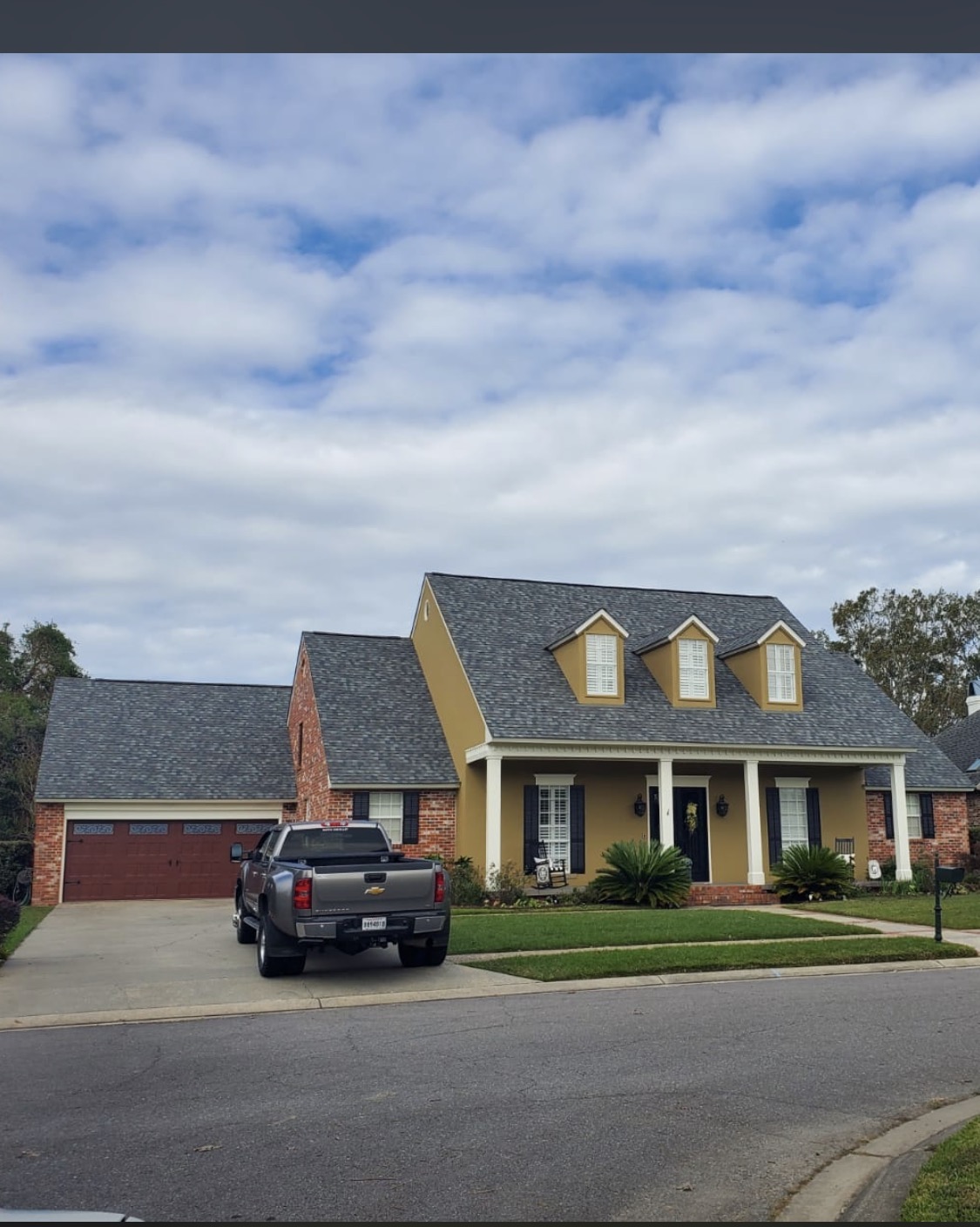
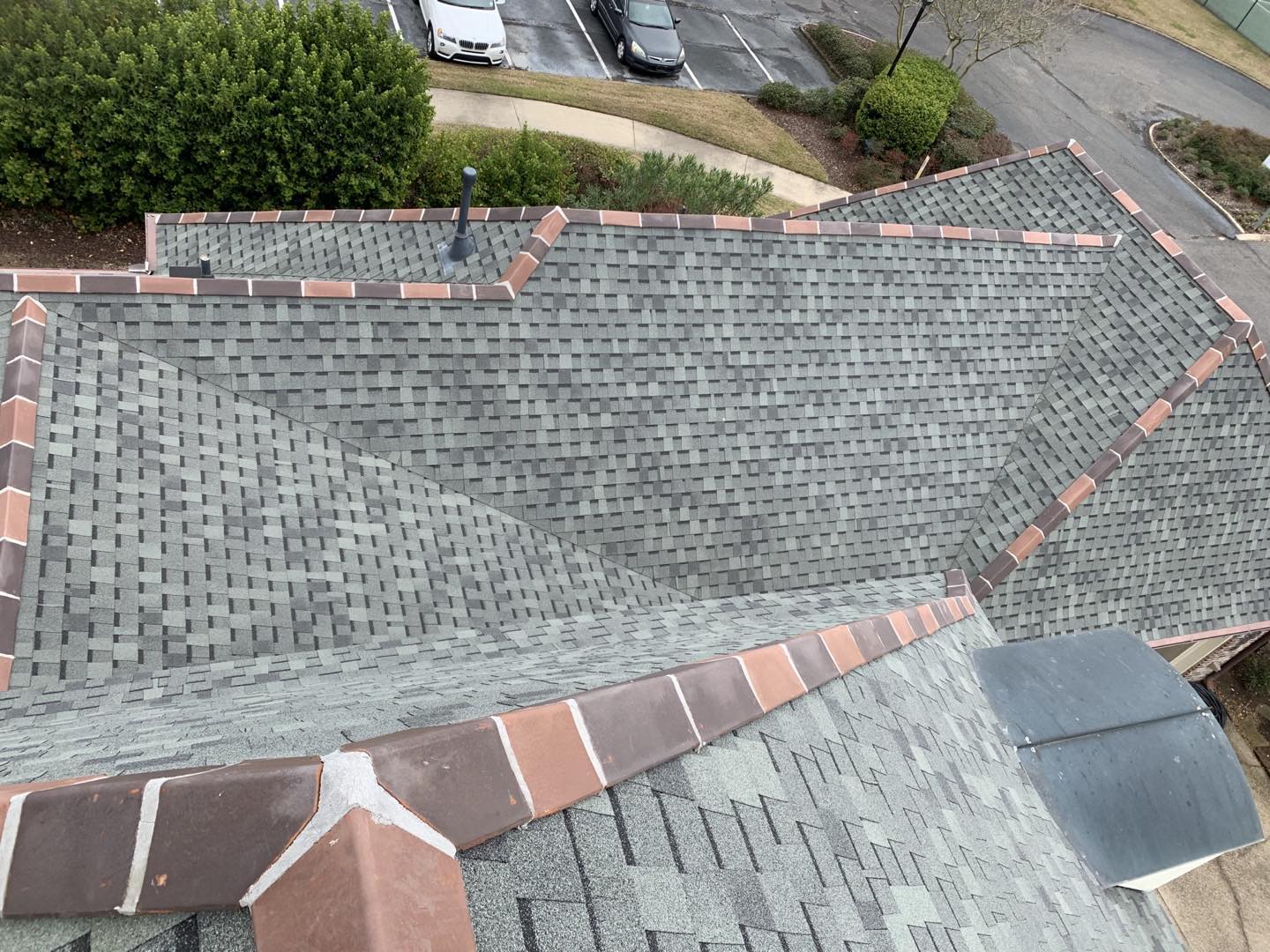
Documentation comes with every repair. Small project, but the paperwork can matter years later — for a buyer’s inspection question, a manufacturer warranty interaction, or future claim history. Every repair we perform comes with photos, written scope, materials specification, and a warranty document filed in our system. That paperwork has saved more than one homeowner a contested claim on resale.
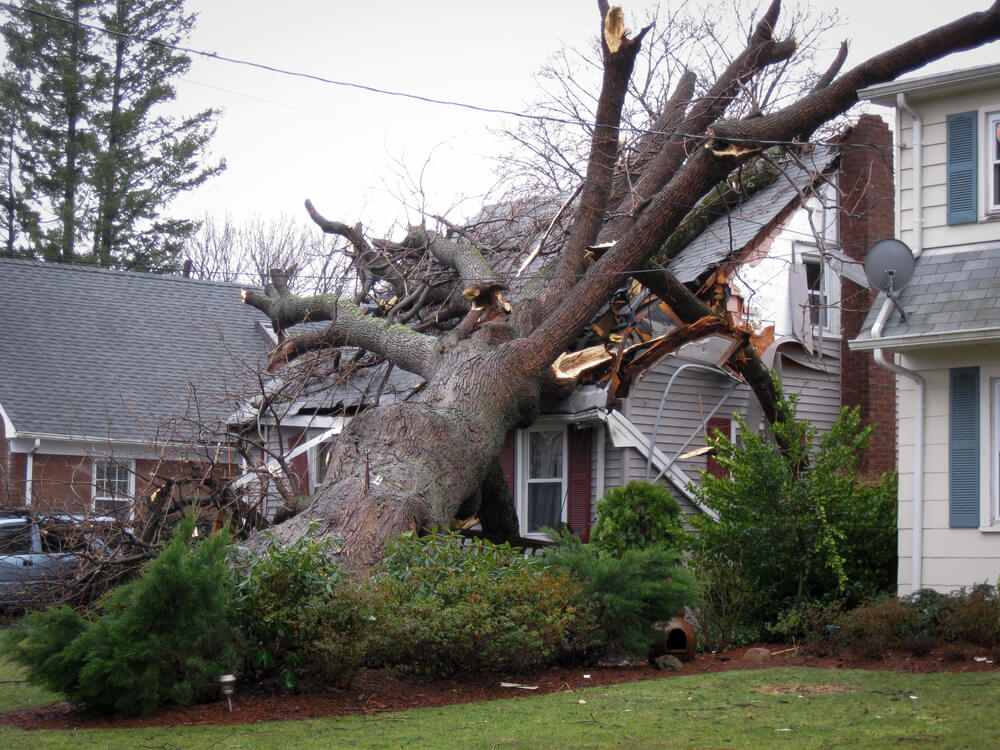
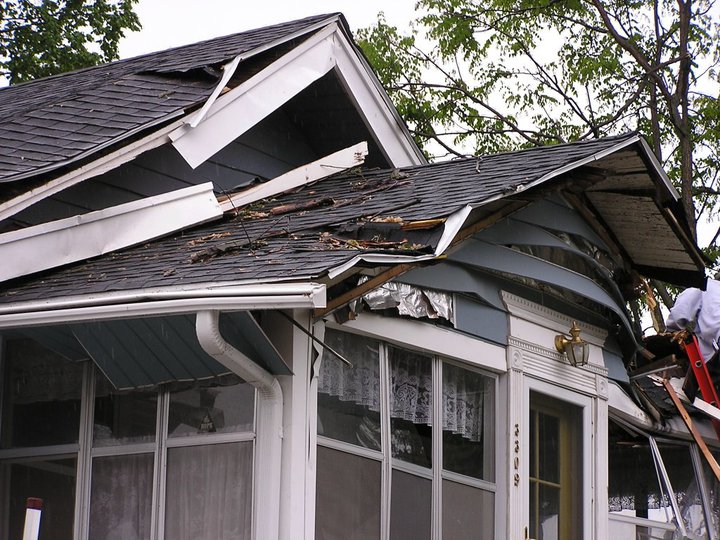
When storm damage is the driver — wind, hail, falling debris, hurricane — we document the damage before any temporary repair, attend your insurance adjuster’s inspection at no charge to point out the documented damage, and complete the repair to manufacturer specification once the scope is approved. Standard, ethical practice — no AOB, no inflated scope, no claim-chasing.
How Residential Roofs Actually Fail
Roof leaks follow predictable patterns. Knowing what to look for is the difference between catching a small problem today and dealing with a much larger repair after six months of attic moisture.
Failed Pipe Boots
The #1 source of “my roof started leaking and the rest looks fine” calls. Pipe boots crack at the rubber seal between year 8 and 12 in our climate, well before the surrounding shingles need attention. Cheap fix, ignored too long.
Wind-Lifted Shingles
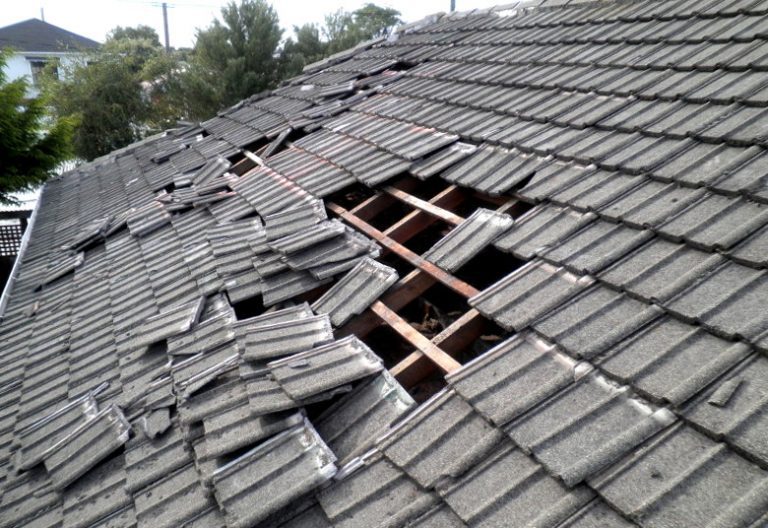
After 60–80 mph wind events, shingles that pulled up but didn’t blow off lose their seal-down strip and become tomorrow’s leaks. Visual inspection from the ground misses most of this — we walk the roof and document.
Hail Bruising
Hail strikes from 1″+ stones leave circular bruises in shingles that compromise the asphalt mat. Not always immediately leaking — but shortens roof life and is a documented claim-eligible damage type with most carriers.
Failed Valley & Step Flashing
Valleys (where two roof slopes meet) and step flashing (where a slope meets a wall) carry concentrated water flow and fail first. Caulk-only repairs by previous contractors typically fail within 2–4 years.
Clogged or Damaged Gutters
Gutters that overflow back-feed water under the lowest course of shingles, rotting fascia and the roof edge from below. Leak presents as “the eaves are leaking” but the actual fix is gutter and drip-edge work — not roofing.
Aged Sealants & Caulk
Builder-grade caulk at chimneys, skylights, and pipe penetrations dries out and shrinks within 7–10 years. Re-caulking with proper roofing-grade sealants (not silicone, not painter’s caulk) is a common preventive repair that gets ignored until it leaks.
RESIDENTIAL ROOF REPLACEMENT:
Repair Until You Can’t. Then Replace Right.
Most roofs don’t fail all at once. They degrade gradually — granules wash away, shingles curl, flashings separate — until there are enough failure points that repair becomes a game of whack-a-mole. When you’re fixing the same roof twice a year, or the damage is widespread across the field, replacement is usually the more cost-effective decision over a five-year horizon.
Chavez Construction Services LLC, gives you a straight answer. We measure the actual condition of your decking, shingles, ventilation, and underlying system — not just the symptom you called about. If your roof is 12 years old and showing one failed pipe boot, that’s a routine repair conversation, not a full-replacement conversation. If it’s 22 years old with widespread granule loss in the gutters and three active leak points, replacement protects your home and your budget long-term. Many of the replacements we install are not insurance-driven — they’re homeowners on their own timing who decided the roof had run its course.
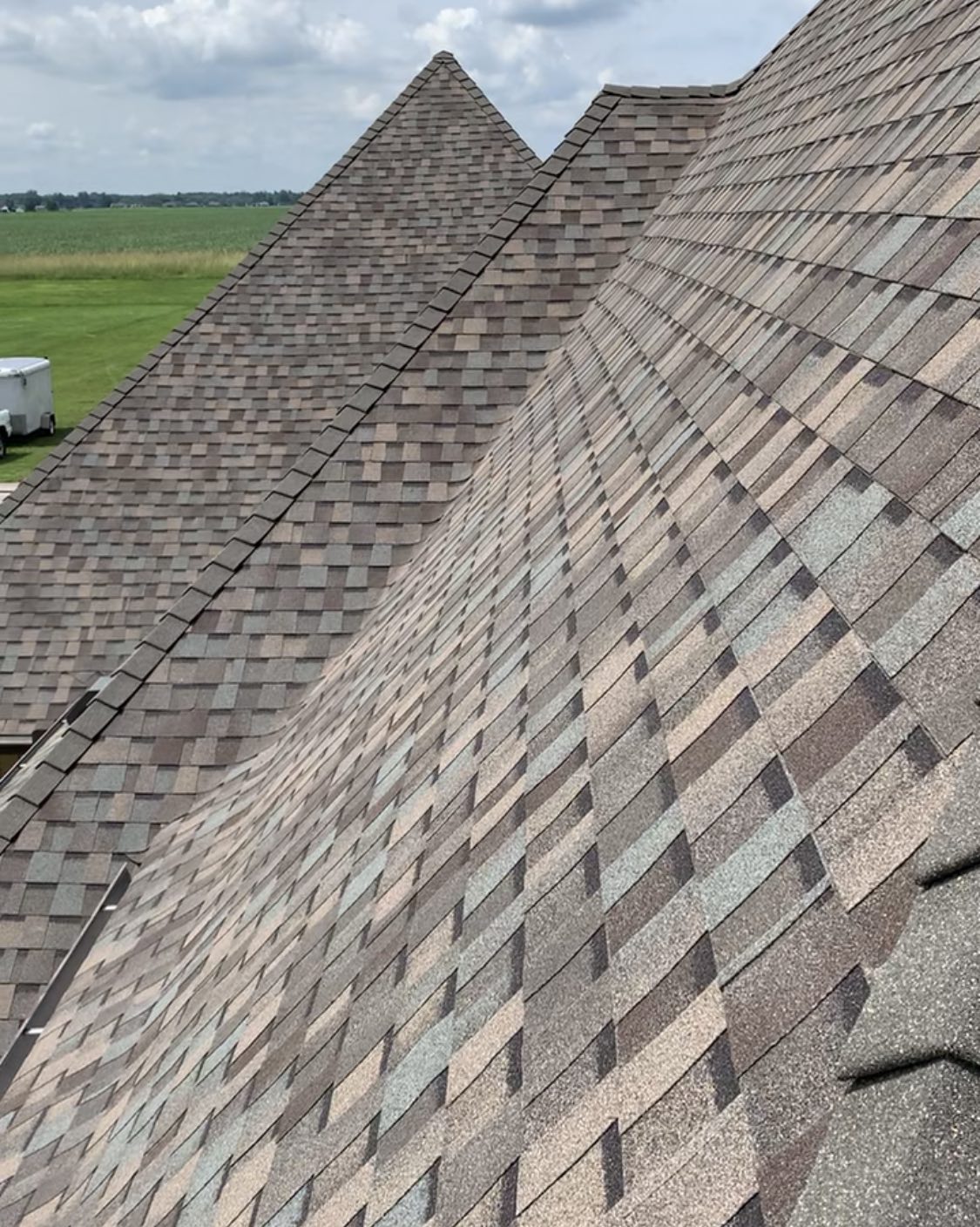
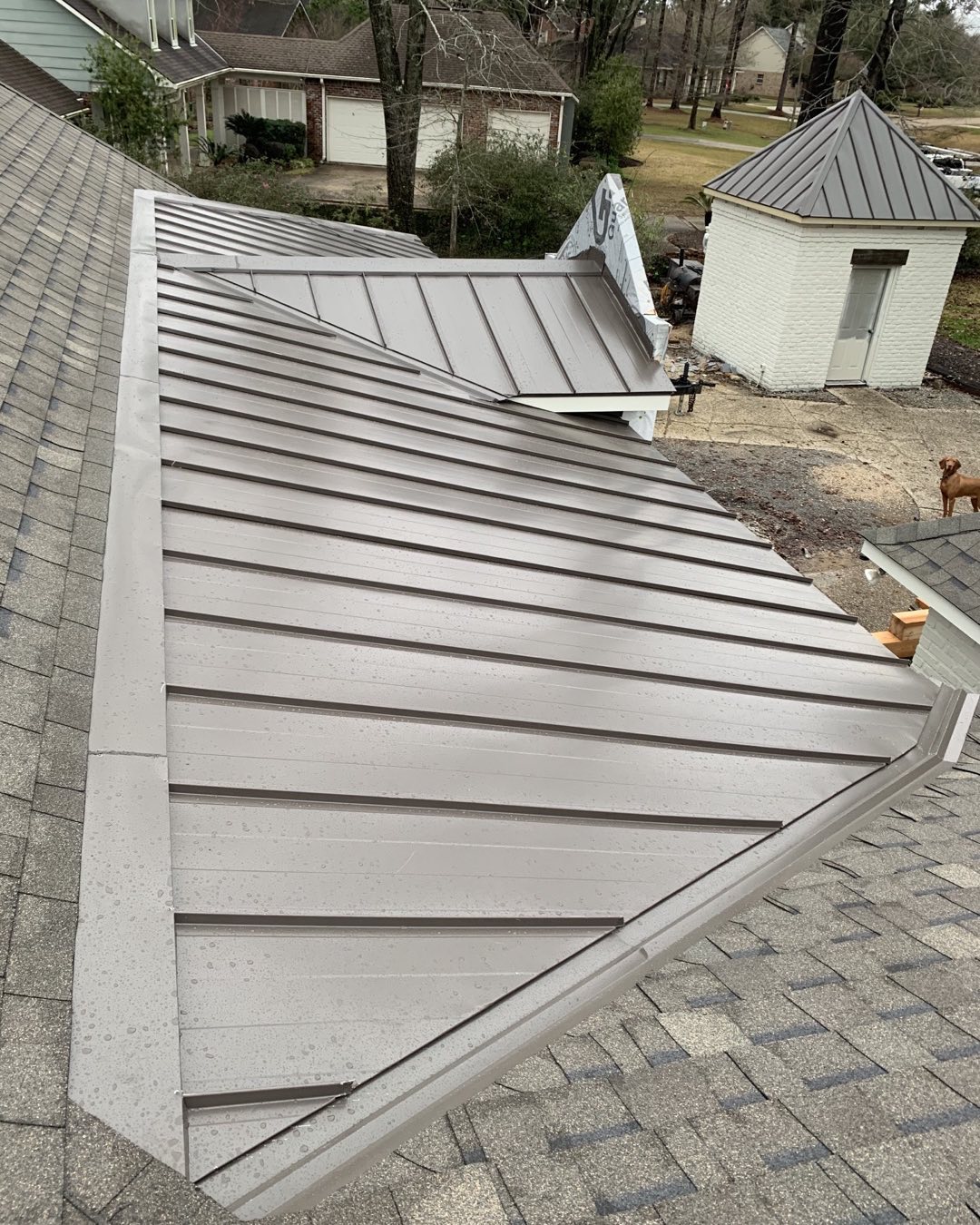
Replacement is the natural moment for upgrades that pay back over the ownership horizon. Class 4 impact-rated shingles add a modest premium to project cost and qualify for significant homeowners’ premium discounts in hail-active markets — frequently penciling inside a 4–7-year window. FORTIFIED designation adds a modest premium over standard re-roof (often grant-eligible in Louisiana through the Fortify Homes Program) and qualifies for state-mandated wind discounts in LA, AL, MS, and SC. Standing-seam metal costs more up-front but lasts roughly 2× the service life of architectural asphalt and handles sustained wind exposure better than nearly any alternative. We walk you through the trade-offs with real numbers — not generic claims.
Storm damage — hail, wind, falling trees, hurricane — is one path to replacement among several. If a covered peril caused damage that exceeds your deductible, your homeowner’s policy typically covers replacement if the damage exceeds your deductible. Once your claim is approved, we complete the replacement to manufacturer specification and the approved scope. But plenty of replacements are simply end-of-life projects on the homeowner’s timing, and that’s most of what we do. We’ll tell you which path fits.
ROOF MAINTENANCE:
Documented Roofs Last Longer and Are Better Positioned for Insurance Review
The single biggest variable in residential roof lifespan isn’t the brand on the wrapper or the gauge of the metal — it’s whether anyone catches the small problems before they become big ones. A failed pipe boot is a 30-minute fix at year 9. The same pipe boot, ignored until it leaks at year 12, takes out attic decking, soaks the insulation, stains drywall, and triggers a major cascading repair no homeowner’s insurance policy will cover (because the carrier classifies it as deferred maintenance, not sudden damage).
That’s the asymmetric math that makes maintenance programs work. Annual inspection costs a few hundred dollars. The 1-in-10 finding it surfaces — a wind-lifted ridge cap, a cracked pipe boot, a failed valley sealant — would cost the homeowner thousands if it ran another three years. Across a 25-year roof life, the math compounds heavily in the maintained roof’s favor.
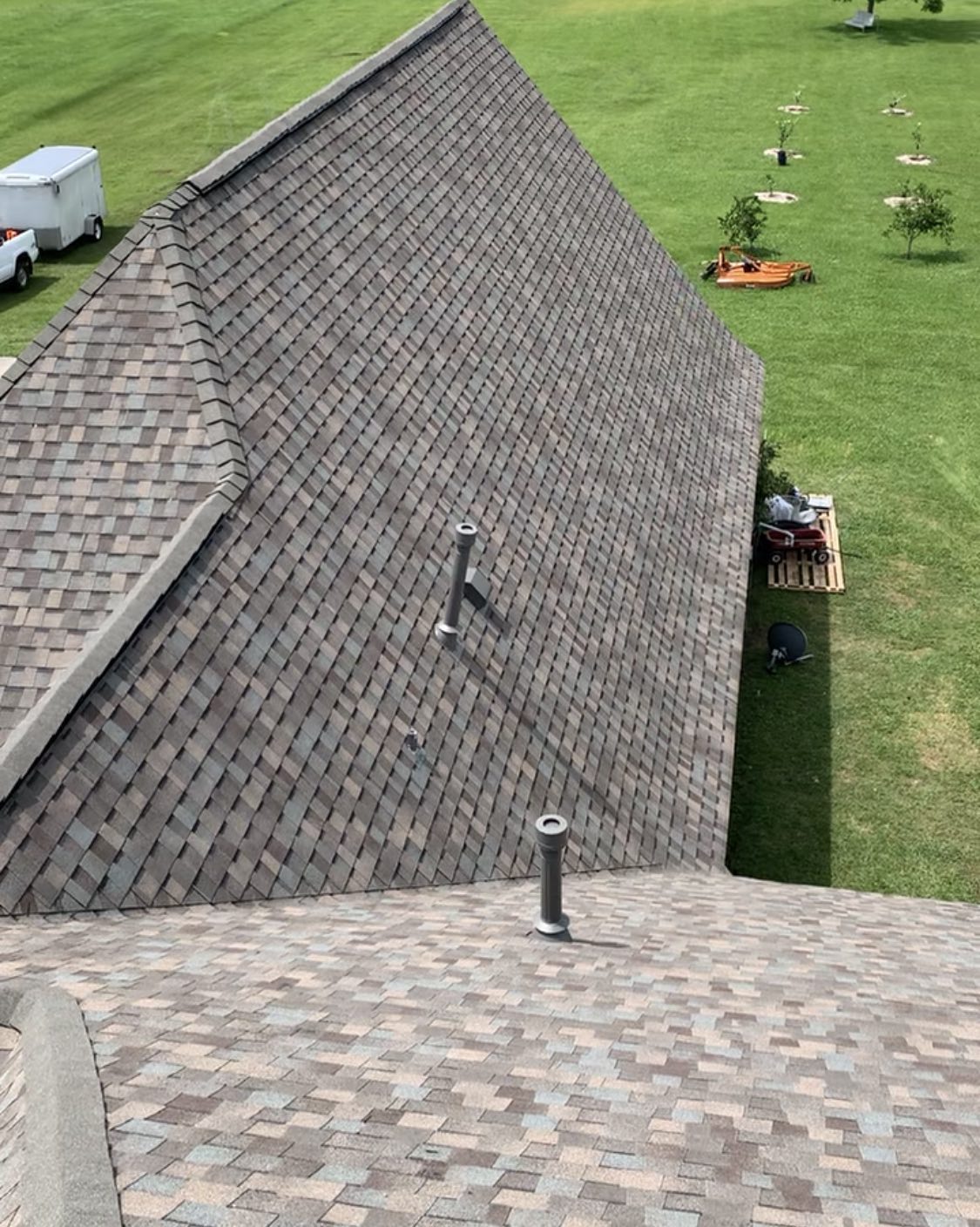
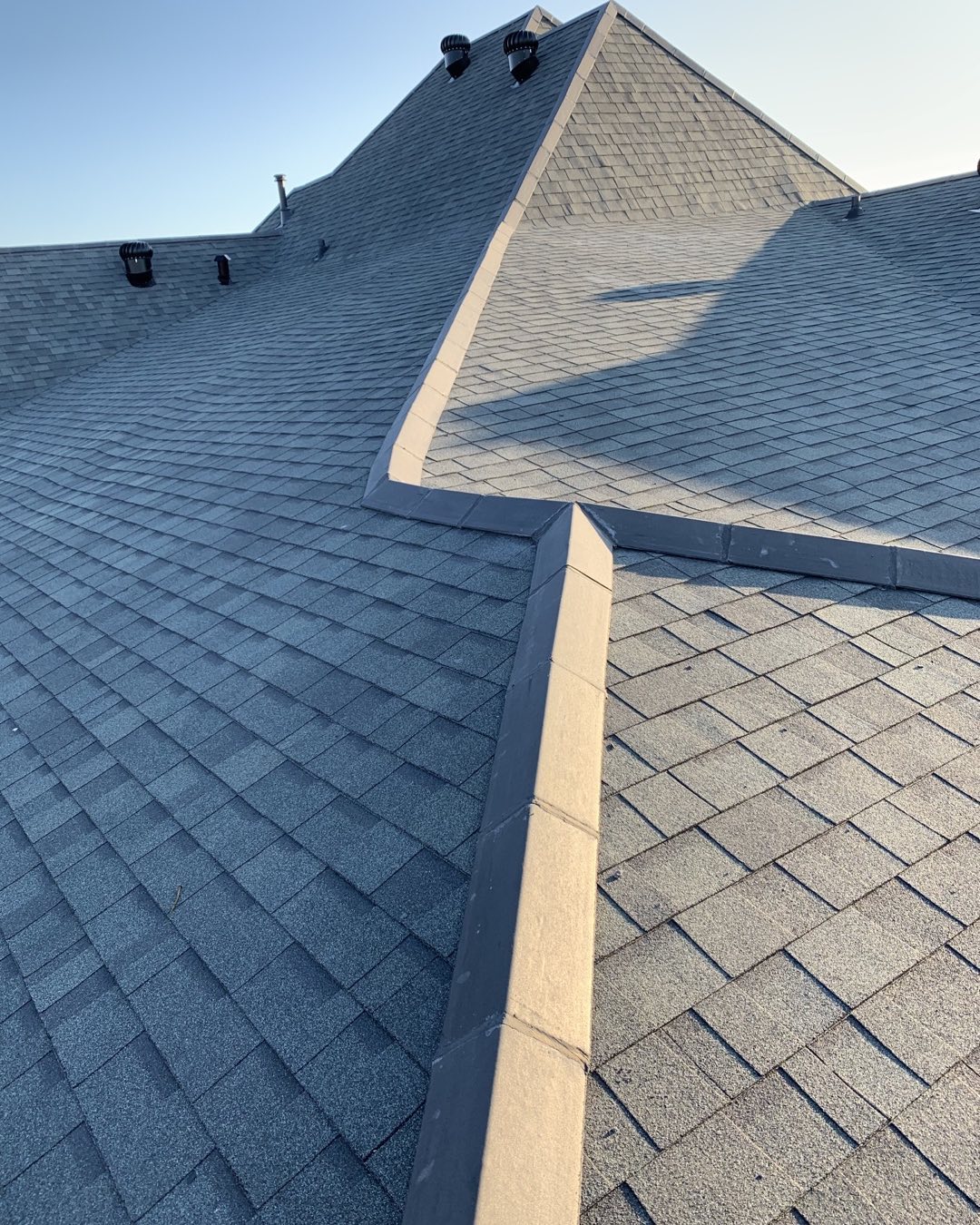
Beyond longevity, maintenance produces three records homeowners need but typically don’t generate: manufacturer warranty compliance documentation (most extended system warranties explicitly require annual maintenance records), insurance pre-condition baseline (proves your roof was in good shape before the storm), and resale-ready documentation (every photo and report transfer to the next owner, supporting buyer-inspection conversations).
Chavez Construction Services LLC, offers two program tiers: Basic Annual Inspection (documentation without bundled service work) and Full Coverage (inspection plus included gutter cleaning, sealant refresh, minor flashing touch-ups, storm-event priority dispatch, and FORTIFIED 5-year re-inspection coordination). Most homeowners with newer roofs start at Basic; those with older roofs, complex geometries, or FORTIFIED designations move to Full Coverage where the included scope quickly outweighs the price differential.
Why Maintenance Pays Back
Extends Roof Service Life
Maintained roofs reach the high end of their warranty range; unmaintained roofs typically retire 5–10 years earlier than the manufacturer’s stated life. The single biggest variable in roof longevity isn’t the brand or material — it’s whether someone catches the failed pipe boot before it becomes a major attic-decking and interior-damage repair.
Preserves Manufacturer Warranty
Most extended manufacturer system warranties (GAF Golden Pledge, Owens Corning Platinum Preferred, CertainTeed 5-Star) require documented annual maintenance to remain valid. We pull the maintenance records when warranty interactions happen and submit on your behalf — homeowners are typically surprised to learn their warranty was conditional on records they weren’t keeping.
Insurance Documentation
Annual inspection records establish a documented condition baseline that supports insurance claims, premium underwriting, and resale. After a storm event, a maintenance record showing the roof was in good condition six months ago provides documentation that insurers may consider when reviewing storm-damage claims. We file every report; you can pull copies any time.
Storm-Event Priority Response
Maintenance program members get priority dispatch after named storms and severe weather events. When 200 homeowners call in the same week after a hurricane, member homes get inspected first — meaningful when interior contents are at risk and adjuster scheduling depends on your roof being inspected.
Catches Small Problems Early
Failed pipe boots, lifted ridge caps, and cracked flashing sealants are routine fixes when caught annually. The same items, ignored for 3–5 years, cause water intrusion, decking rot, drywall damage, and insulation replacement — a much larger cascading repair. Maintenance is the cheapest insurance against the second outcome.
FORTIFIED Re-Inspection Coordination
FORTIFIED designations carry a 5-year re-inspection requirement to maintain the certification (and the associated insurance discount). We coordinate the re-inspection as part of the maintenance program — homeowners don’t have to track the schedule or shop for evaluators when the time comes.
Pre-Listing Inspection Reports
Selling your home? A pre-listing roof inspection report lets you correct issues before the buyer’s inspection finds them — and gives you a clean document to show prospective buyers. Members get the report at no additional charge as part of normal annual inspection.
Documented Lifecycle Records
Our system stores every photo, report, and finding for the life of the property. When you sell, the new owner inherits the records and can continue the program. When the original contractor isn’t around to vouch for warranty compliance, the records are.
ASPHALT SHINGLE ROOFING:
The Most-Specified Roof in America — Done Right
A modern asphalt shingle is a layered composite: a fiberglass mat saturated and coated with asphalt, surfaced with ceramic-coated granules that provide UV protection, color, and impact resistance. The architectural (dimensional) shingle that dominates today’s residential market is two of those mats laminated together — creating depth, shadow lines, and the wind resistance to handle 110–130 mph gusts.
Asphalt covers more than three-quarters of U.S. homes because it delivers an unmatched combination of cost, storm performance, aesthetics, and repairability. A quality architectural roof, properly installed and maintained, protects a home for 25–35 years in Southern climates. Class 3 and Class 4 impact-resistant lines push that figure further and qualify for meaningful homeowner’s insurance premium discounts.
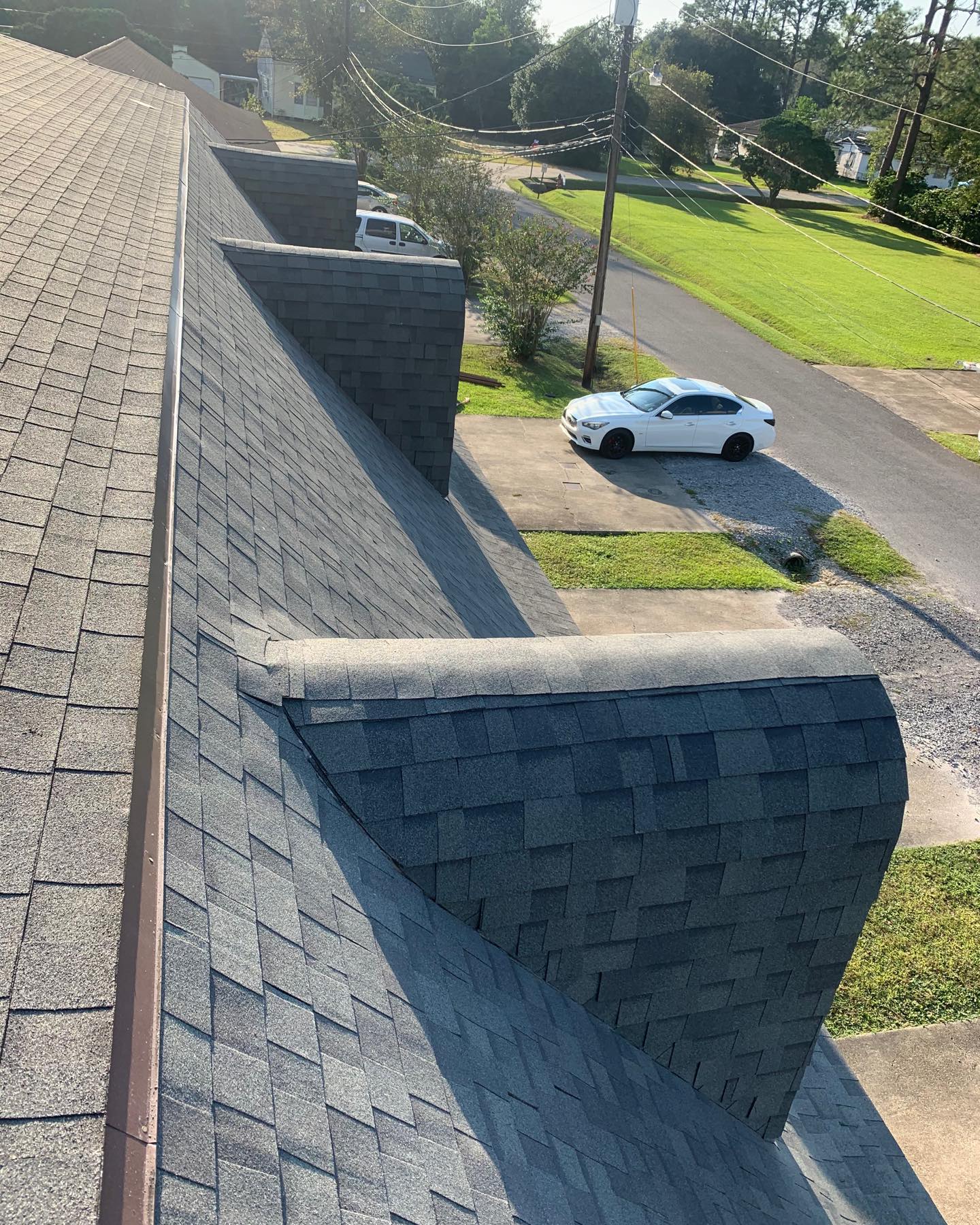
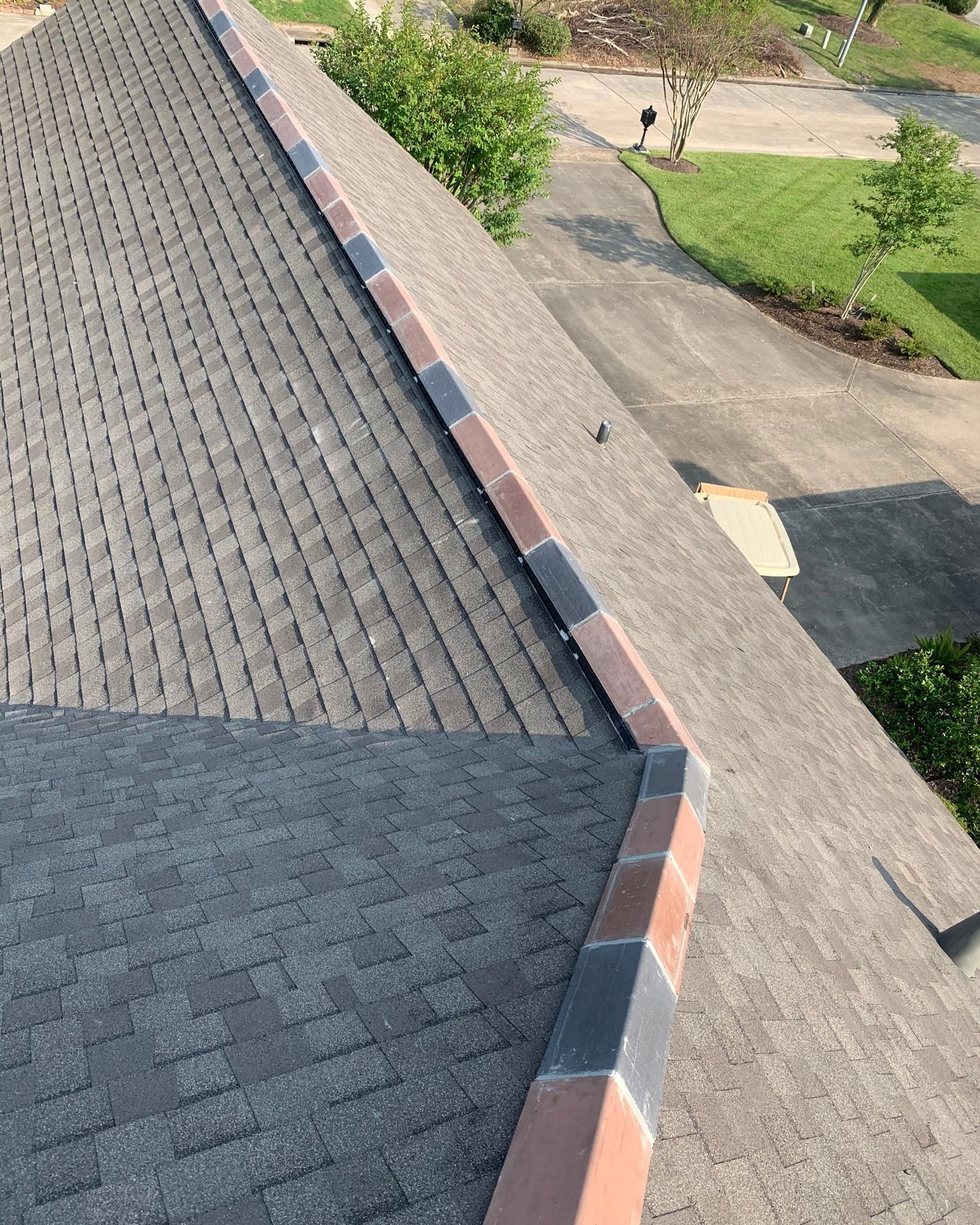
The single biggest variable in shingle roof lifespan isn’t the brand on the wrapper — it’s the install. Inadequate nailing, wrong underlayment, blocked attic ventilation, or skipped flashing details shorten roof life by a decade. Chavez Construction Services LLC, installs to manufacturer specification because that’s the only way the warranty actually holds and the only way the roof lasts what it’s supposed to last.
We are manufacturer-certified across the major shingle lines — GAF Certified Contractor, Owens Corning Platinum Preferred, CertainTeed SELECT ShingleMaster, and IKO ROOFPRO Select — which lets us register enhanced system warranties that cover both materials and our workmanship for 25–50 years. Most homeowners never realize there’s a difference until the day they need the warranty.
Why Asphalt Is the Right Default
Cost-Effective Performance
Asphalt covers 75% of U.S. homes for a reason — it delivers 20–40 years of weather protection at a fraction of the cost of metal, slate, or tile. The single most cost-effective decision a homeowner can make on a long-term home.
Storm-Ready Options
Class 3 and Class 4 impact-resistant shingles are engineered for the hail and wind events common in LA, AR, KS, AL, MS, TX, and FL. They lose fewer granules under hail strikes, hold their seal under high wind, and qualify for homeowners insurance premium discounts on most major carriers.
Installation Detail Matters
The difference between a 35-year roof and a 15-year roof on the same shingle is the install. Manufacturer-spec nailing pattern (4-nail for standard wind zones, 6-nail for high-wind), proper exposure, drip edge with full return, valley flashing detail, and ice-and-water shield at the eave and valleys. Chavez’s installs to the spec the manufacturer wrote — that’s how the warranty actually holds.
Curb Appeal & Resale
Architectural shingles come in dozens of colors and shadowed dimensional profiles that complement virtually any home style — ranch, colonial, craftsman, contemporary. A new shingle roof is one of the highest-ROI exterior upgrades in residential real estate.
Repairability
Spot repairs are straightforward and inexpensive — a missing shingle, a cracked pipe boot, a wind-lifted ridge cap. Unlike slate or tile, asphalt repairs don’t require specialty tradespeople or scarce materials, so warranty-period maintenance stays affordable.
Wide Warranty Range
Standard architectural shingles ship with 30-year limited warranties. Premium designer and Class 4 lines extend to 50 years. When installed by a manufacturer-certified contractor like Chavez Construction Services LLC, enhanced ‘system’ warranties cover both materials and workmanship.
Lightweight on Structure
Asphalt weighs roughly 250–450 lbs per square (100 sq ft). Compared to clay tile (900–1,100 lbs/sq) or slate (700–1,000 lbs/sq), it places minimal load on the home’s framing — meaning fewer structural upgrades during a re-roof.
Fire Performance
All asphalt shingle products carry a UL Class A fire rating when installed over approved underlayment — the highest residential fire classification. Critical in regions with brush fire risk and increasingly relevant for insurance underwriting.
METAL ROOF:
The Roof That Outlasts the Mortgage
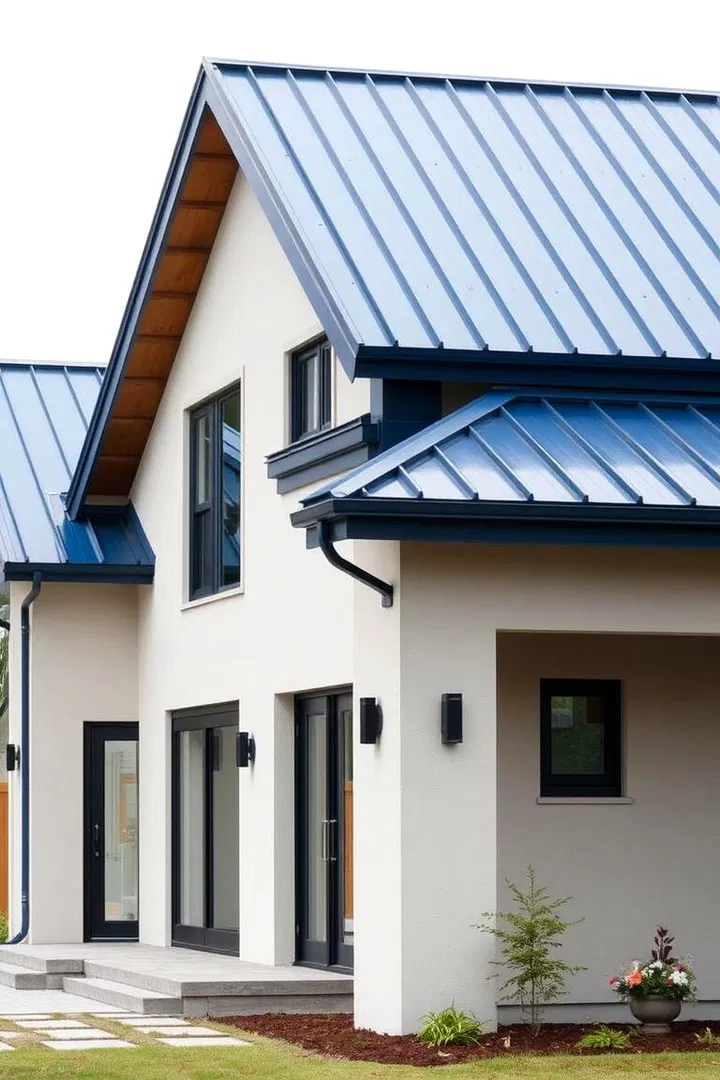
Residential metal roofing is engineered from coated steel, aluminum, zinc, or copper — stamped, rolled, or formed into panels and fastened to the roof deck through a system of clips or screws. Modern residential metal isn’t the corrugated barn roof of decades past: today’s standing seam profiles, stamped shingles, and stone-coated steel deliver virtually any residential aesthetic — at performance levels asphalt shingles can’t match.
A 24-gauge Galvalume steel standing seam roof, properly installed with a Kynar 500 paint system over peel-and-stick high-temp underlayment, will deliver 50–70 years of service across the LA, AR, KS, AL, MS, TX, and FL markets we cover. That’s twice the service life of a 30-year architectural shingle — and the metal roof will keep its color, hold its shape under hail, and cost less to maintain across that span.
Metal is also the responsible default in two specific scenarios: hail belts (where Class 4 impact-rated metal qualifies for the deepest insurance discounts) and hurricane zones (where wind ratings of 140 mph and HVHZ approvals are sometimes the only path to coverage). For homeowners in those markets, the math doesn’t favor asphalt.
The trade-off is upfront cost. A standing seam roof typically runs 2–3× the cost of a Class 3 architectural shingle installs. For a 5–7-year ownership window, asphalt is the rational choice. For a 15+ year horizon, metal usually wins on lifecycle cost — and that’s before the insurance premium savings get factored in.
SLATE ROOFING:
What Is Slate Roofing?
The Premier Residential Roofing Material
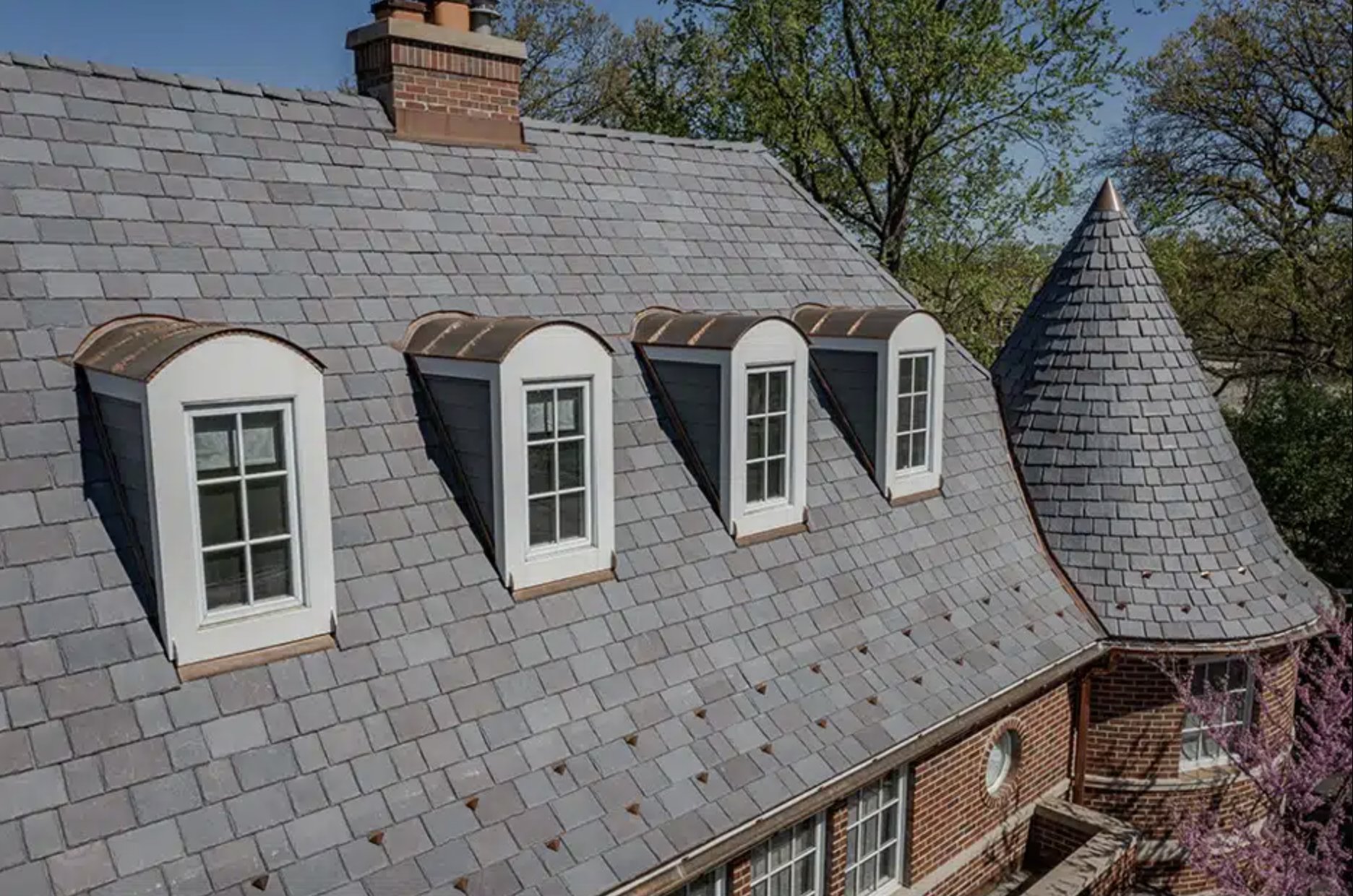
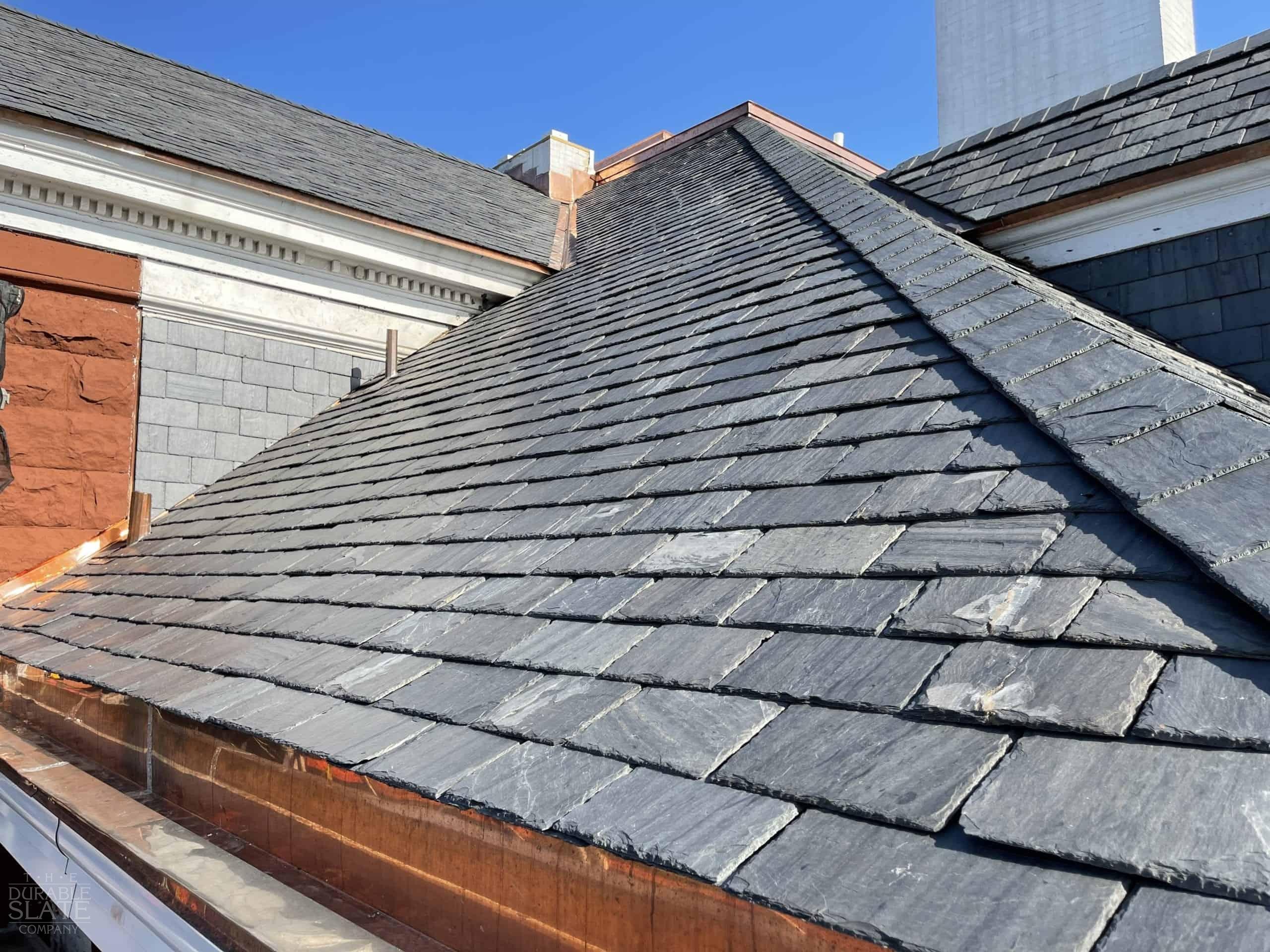
Natural slate roofing is quarried, split, and graded stone — typically 1/4 to 3/8-inch-thick — hand-installed in overlapping courses on a steep-slope roof. It has been the roof material of choice for premier residential, civic, and ecclesiastical architecture across Europe and North America for more than 500 years. American slate quarries in Vermont and Pennsylvania began commercial production in the 1830s; many of those original slate roofs are still in service today.
Synthetic slate is a 21st-century material engineered to deliver the slate aesthetic at a fraction of the weight and cost. Manufacturers like DaVinci Roofscapes, EchoStar Majestic Slate, and Brava produce polymer composites that are visually nearly indistinguishable from natural slate at distances of 50 feet — and that carry UL 2218 Class 4 impact ratings that natural slate doesn’t offer. 50-year manufacturer warranties.
Slate makes financial sense in three specific situations: historic restoration (where preservation requirements demand it), premier estate construction (where the roof is expected to be the last one the home ever needs), and hail-prone markets specifying Class 4 synthetic (where the impact resistance pays back through insurance discounts). For most other homes, asphalt or metal is the more rational choice — and we’ll say so.
The single biggest variable in a slate project isn’t the slate; it’s the trade. Slate installation is a craft skill that doesn’t transfer from asphalt or metal — copper flashings, slate hooks, lead-coated copper saddles, and the rhythm of hand-laying overlapping courses all require specialty experience.
RESIDENTIAL STORM DAMAGE:
Our Storm Damage Approach
We Document. We Don’t Chase.
Every named storm in our LA, AR, KS, AL, MS, TX, and FL service area produces two kinds of contractor response. The first is opportunistic — out-of-state crews’ door-knocking neighborhoods, signing Assignment of Benefits agreements, inflating claim scopes, doing partial work, and disappearing before warranty calls happen. The second is what Chavez Construction Services LLC, is: local, permanent, state-licensed, fully insured, documenting actual damage and letting carriers pay what’s actually owed.
Storm-damage claim work follows a predictable sequence: damage inspection and documentation, emergency tarping if needed, claim filing with the carrier, adjuster inspection (we attend at no charge), claim approval and scope finalization, and permanent repair to the approved scope. We own the documentation and repair work at every stage, and produce records the homeowner can use long after the project is closed — for resale, for warranty interactions, or for any subsequent claim that references the same property.
We do not chase claims that aren’t there. If your roof doesn’t have documentable storm damage, we’ll tell you that and recommend either continued maintenance or, when appropriate, an out-of-pocket repair or replacement. Filing claims for damage that doesn’t exist hurts the homeowner’s insurability — and we don’t inflate scopes for damage that’s present. The carrier pays what’s actually owed; the homeowner gets actual repair.
We document the damage and attend the adjuster inspection at no charge. The pre-tarp documentation we capture on the initial response visit is the foundation of the subsequent claim — without it, claims get contested for lack of pre-restoration evidence. Adjuster inspections are attended at no charge. Repair is completed to claim scope plus any out-of-pocket upgrades the homeowner elects (Class 4 shingles, FORTIFIED designation, metal upgrade) — upgrades that typically pay back through ongoing insurance discounts.
We do not chase claims that aren’t there. If your roof doesn’t have documentable storm damage, we’ll tell you that and recommend either continued maintenance or, when appropriate, an out-of-pocket repair or replacement. Filing claims for damage that doesn’t exist hurts the homeowner’s insurability — and we don’t inflate scopes for damage that’s present. The carrier pays what’s actually owed; the homeowner gets actual repair.
We document the damage and attend the adjuster inspection at no charge. The pre-tarp documentation we capture on the initial response visit is the foundation of the subsequent claim — without it, claims get contested for lack of pre-restoration evidence. Adjuster inspections are attended at no charge. Repair is completed to claim scope plus any out-of-pocket upgrades the homeowner elects (Class 4 shingles, FORTIFIED designation, metal upgrade) — upgrades that typically pay back through ongoing insurance discounts.